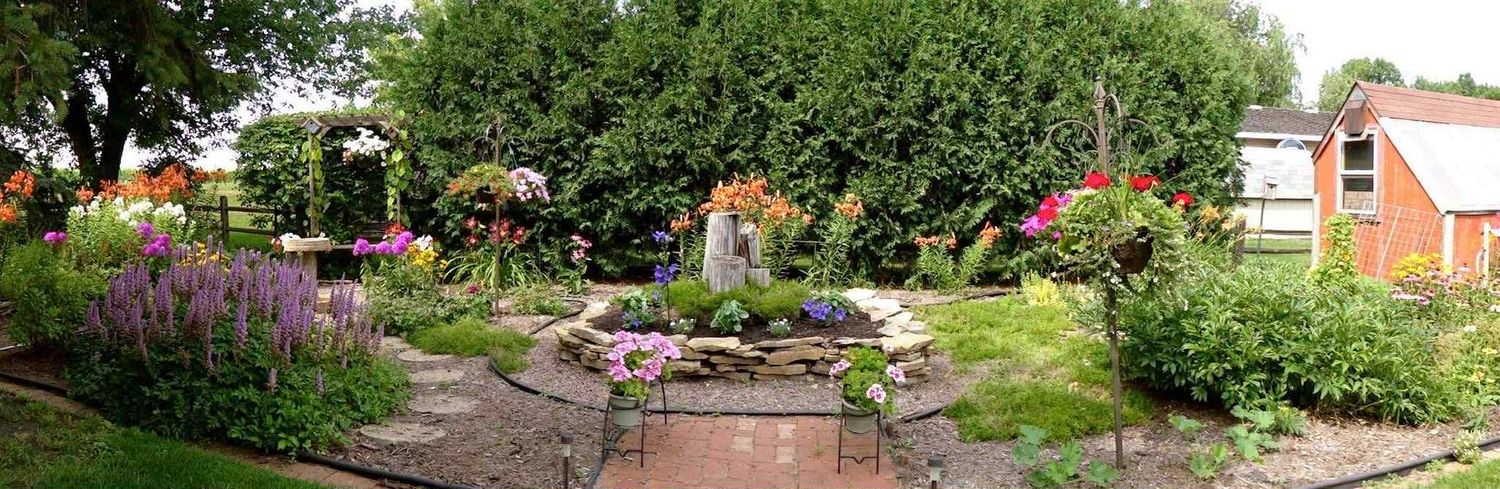
Real Life Learning
Rooted in Wonder: Real-World Family Learning Through a Pollinator Habitat
There’s something powerful about creating a space where learning feels alive. For our family, that space has been our backyard—and more specifically, our layered pollinator habitat. What started as a personal project quickly blossomed into a dynamic source of science exploration, ecological stewardship, and meaningful connection across generations.
A Legacy of Growing
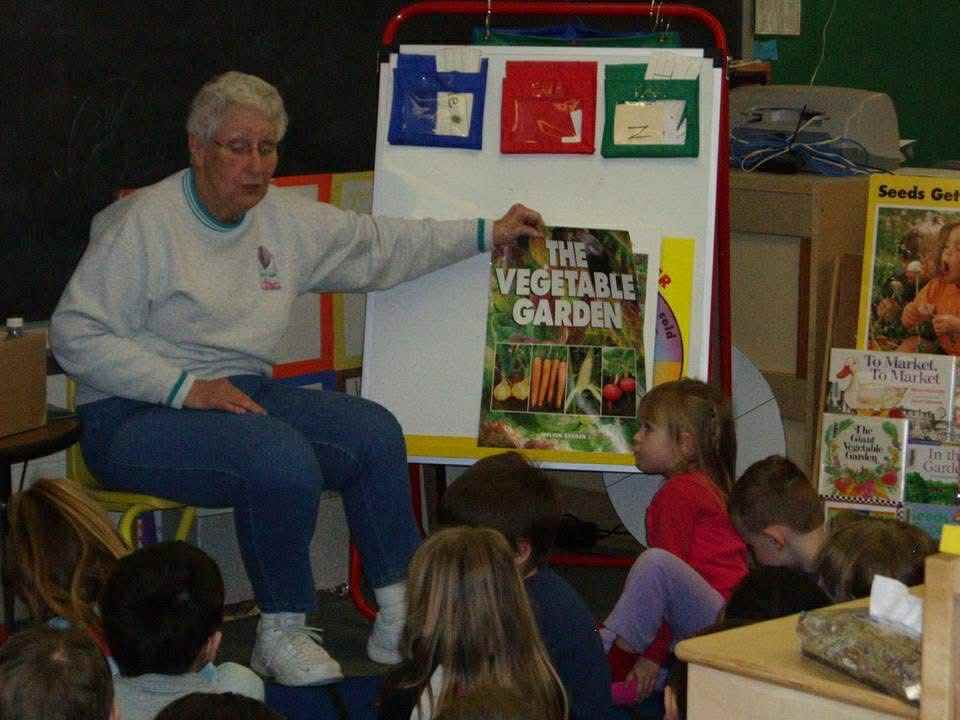
My grandma volunteering in my first classroom
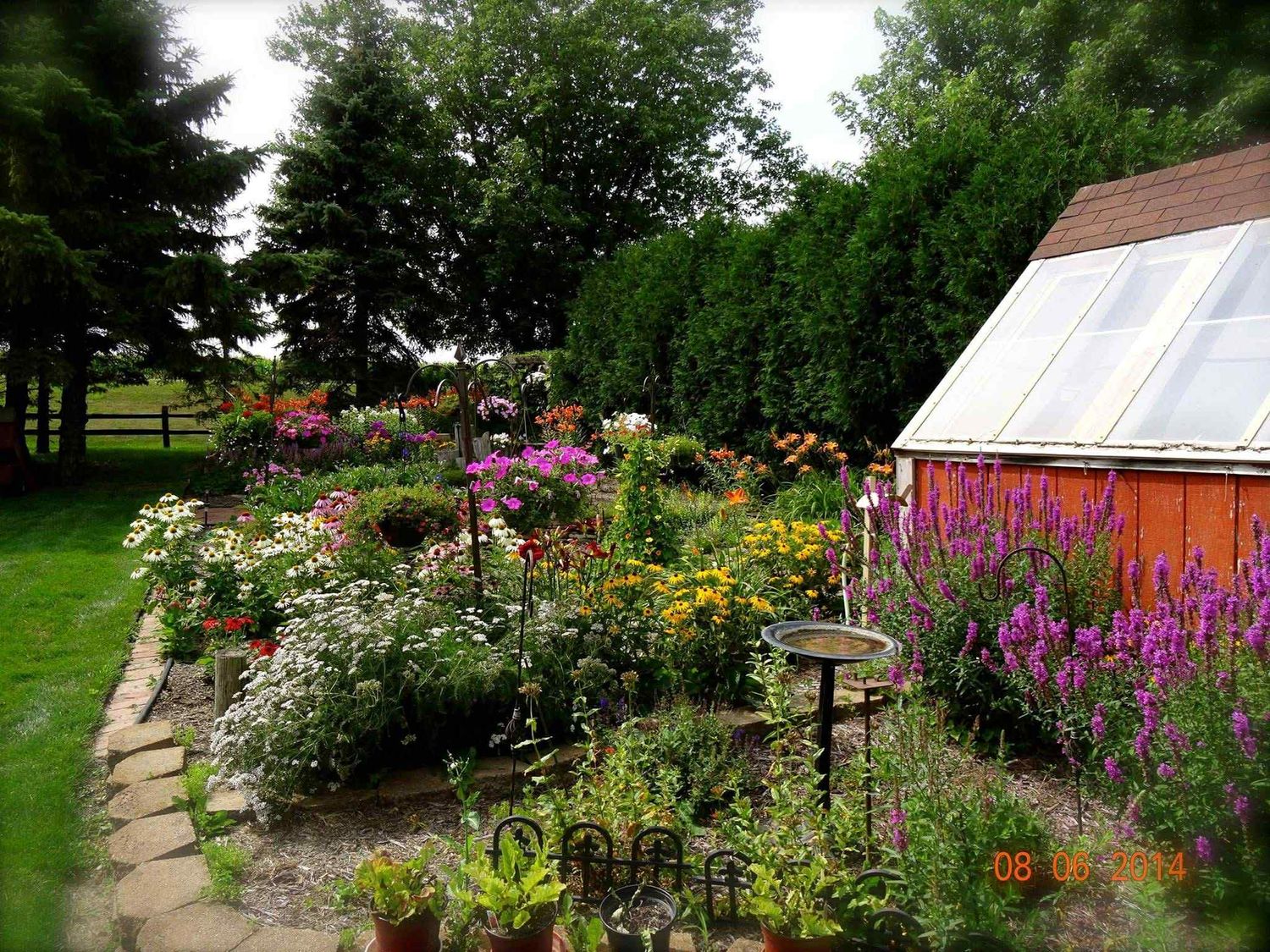
One of my grandma's gardens (banner photo also her garden)
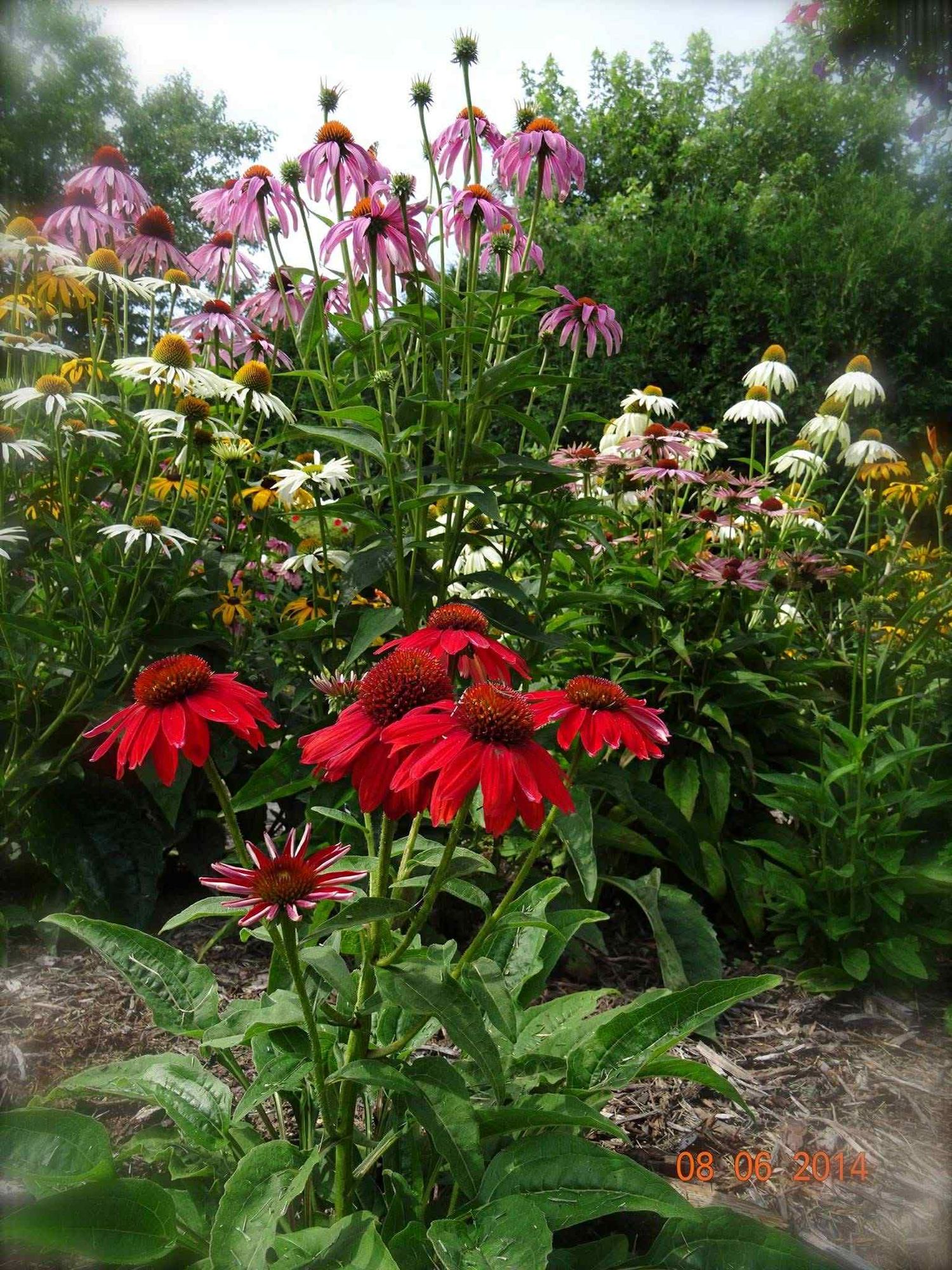
Close up of one of my grandma's gardens
For me, this journey is personal. I grew up alongside a grandmother who was more like a second mother. She was a Master Gardener, president of the First District of the Horticultural Society, and president of her local garden club. While my interests have taken a slightly different path, the roots are the same: hers in ornamental beauty and formal gardens, mine in restoring native habitats for wildlife and growing food for health and sustainability.
Each time I plant, weed, or harvest, I feel her presence. Gardening has become a kind of therapy—grieving, remembering, and reconnecting through the land. And now, I get to share that connection with my own children.
From Caterpillars to Community Science
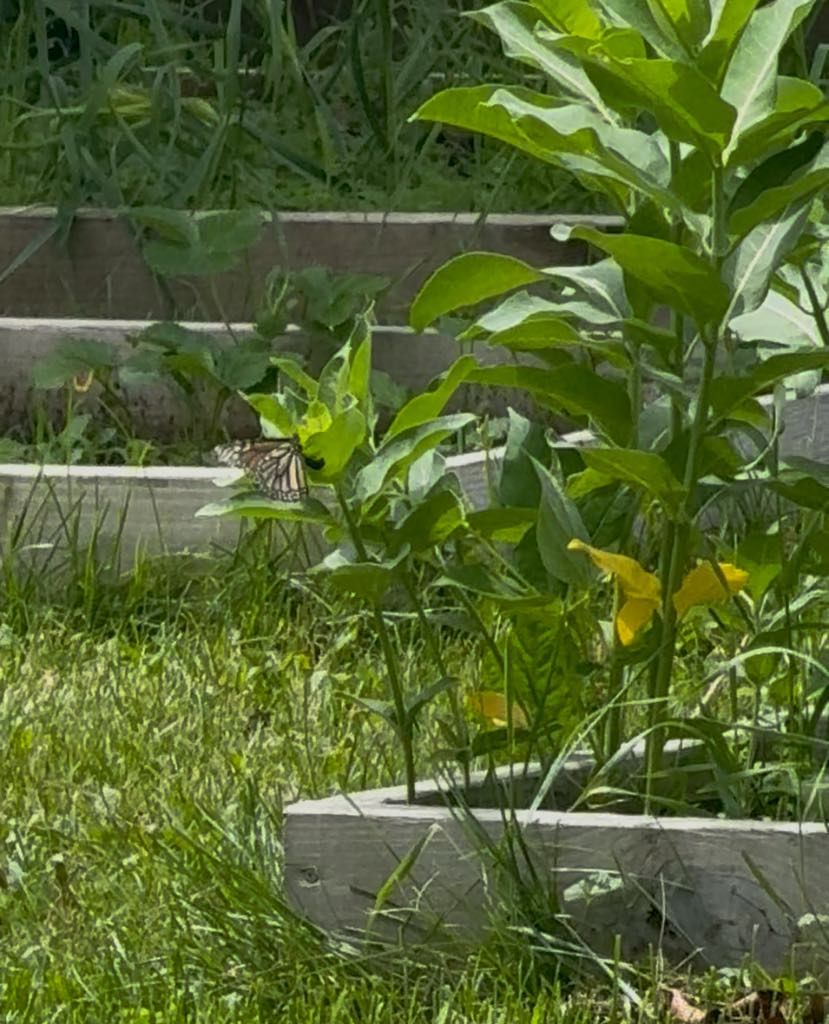
Monarch laying an egg on common milkweed
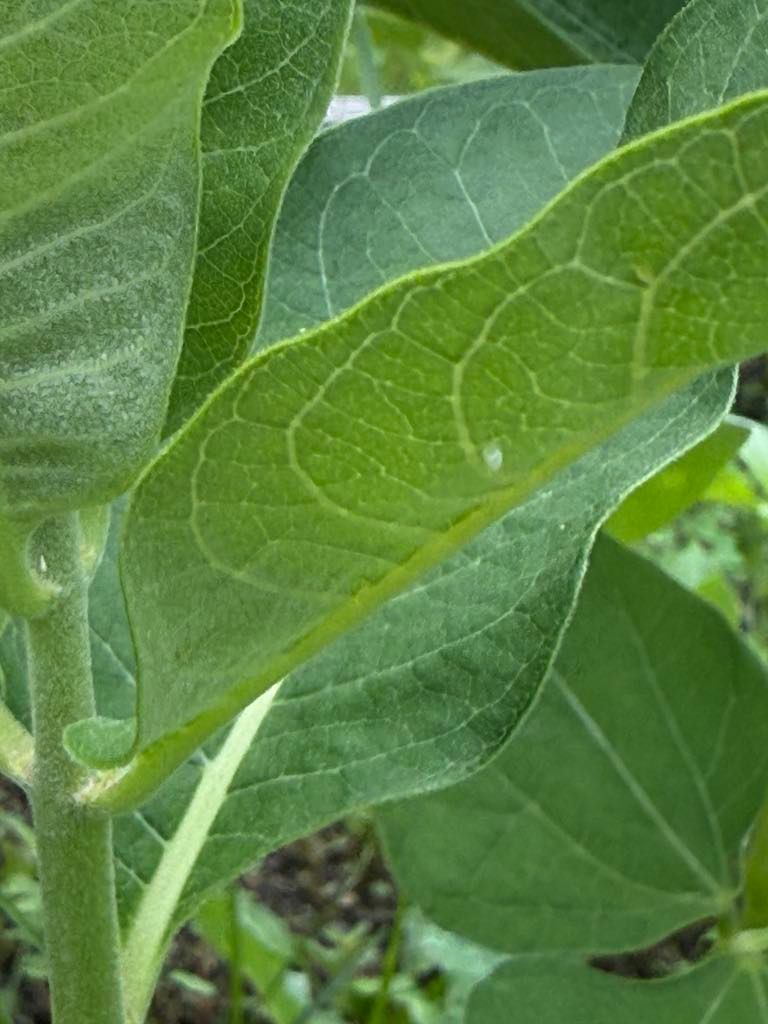
Monarch egg
Rather than ordering caterpillars in the mail or raising butterflies in enclosures—which recent research suggests may do more harm than good—we’ve taken a different approach. We plant what they need to thrive in the wild. That means including host plants for caterpillars, nectar-rich flowers for adult butterflies and pollinators, and creating a welcoming habitat that provides shelter and space for the entire life cycle.
Today, we watched a monarch flutter through our milkweed patch, and later, we discovered the tiny pearl-like eggs she left behind. Earlier this week, we found a black swallowtail caterpillar feasting on our Golden Alexanders. Our garden is a living classroom—and it teaches patience, curiosity, and care.
A Habitat That Welcomes All
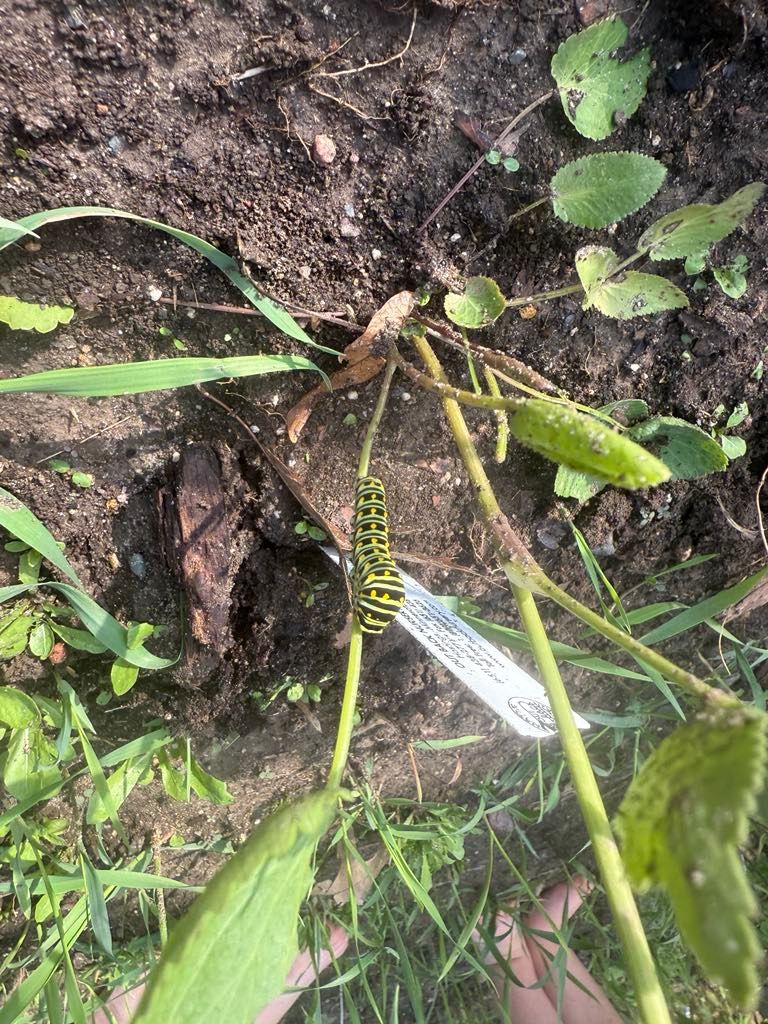
Black Swollowtail caterpillar on Golden Alexanders
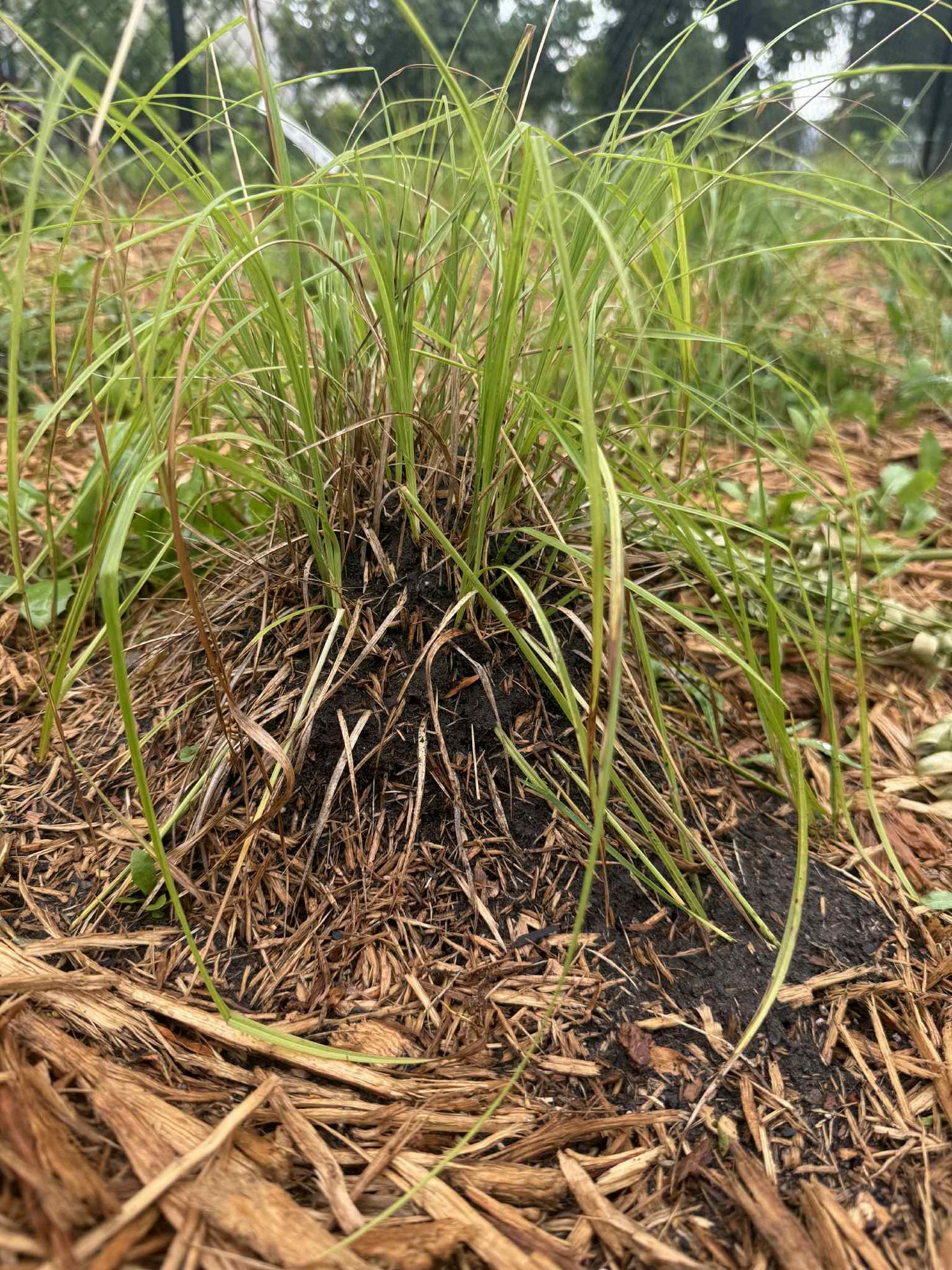
Ant colony in Sprengel's sedge
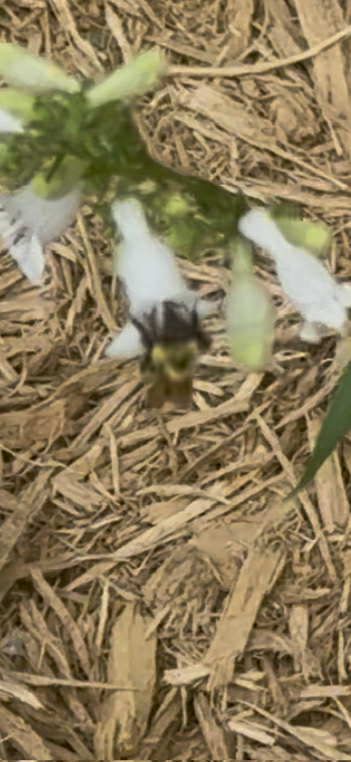
Bee on Foxglove Beardtongue (next up is learning about our native bee species)
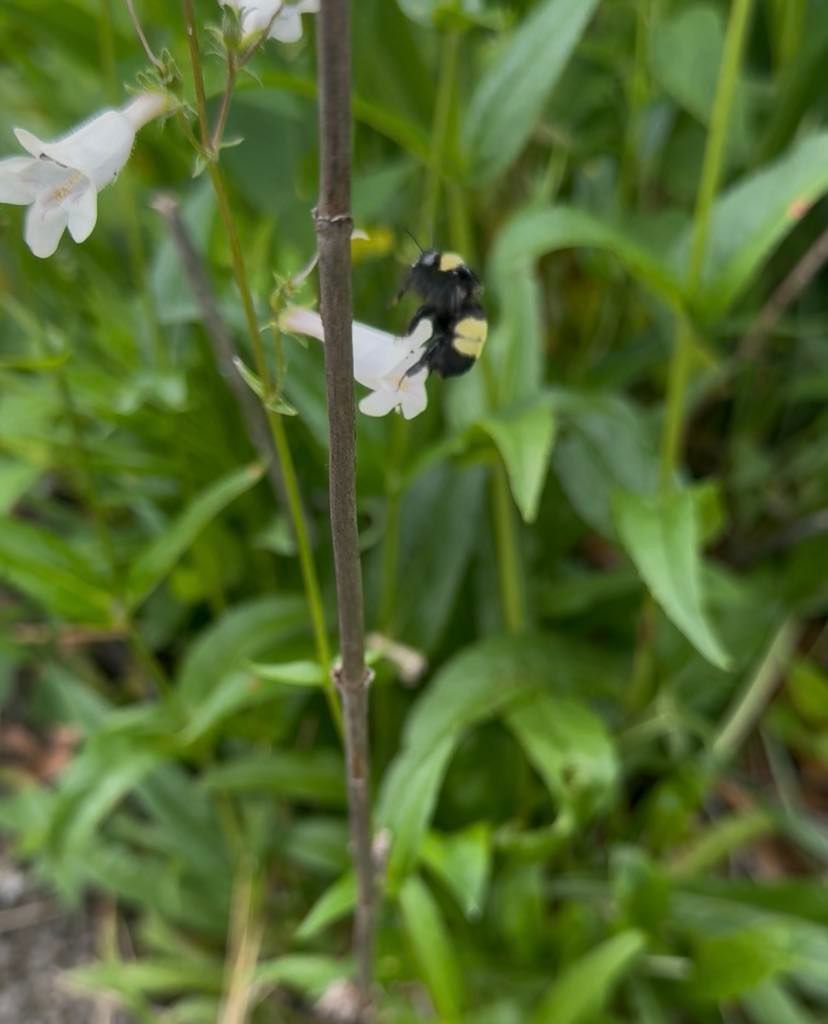
Bee on Foxglove Beardtongue
Our native plantings have invited more than just pollinators. This spring, we discovered three nests under our deck—two house finches and a robin. Tree swallows have taken up residence above our deck, and another robin family nests above our garage. We’ve spotted additional nests high in the trees, still waiting to be identified.
Beyond the birds, we’ve noticed a delightful array of bees (including a queen!), butterflies, damselflies, and even ant colonies—who, yes, also play a role in pollination. My kids have grown up with the vocabulary of native species, and it brings me such joy to hear them spontaneously identify milkweed, dogwood, coneflower, nannyberry, or spot a house finch, robin, cardinal, or monarch fluttering through the garden.
Observation as a Daily Practice
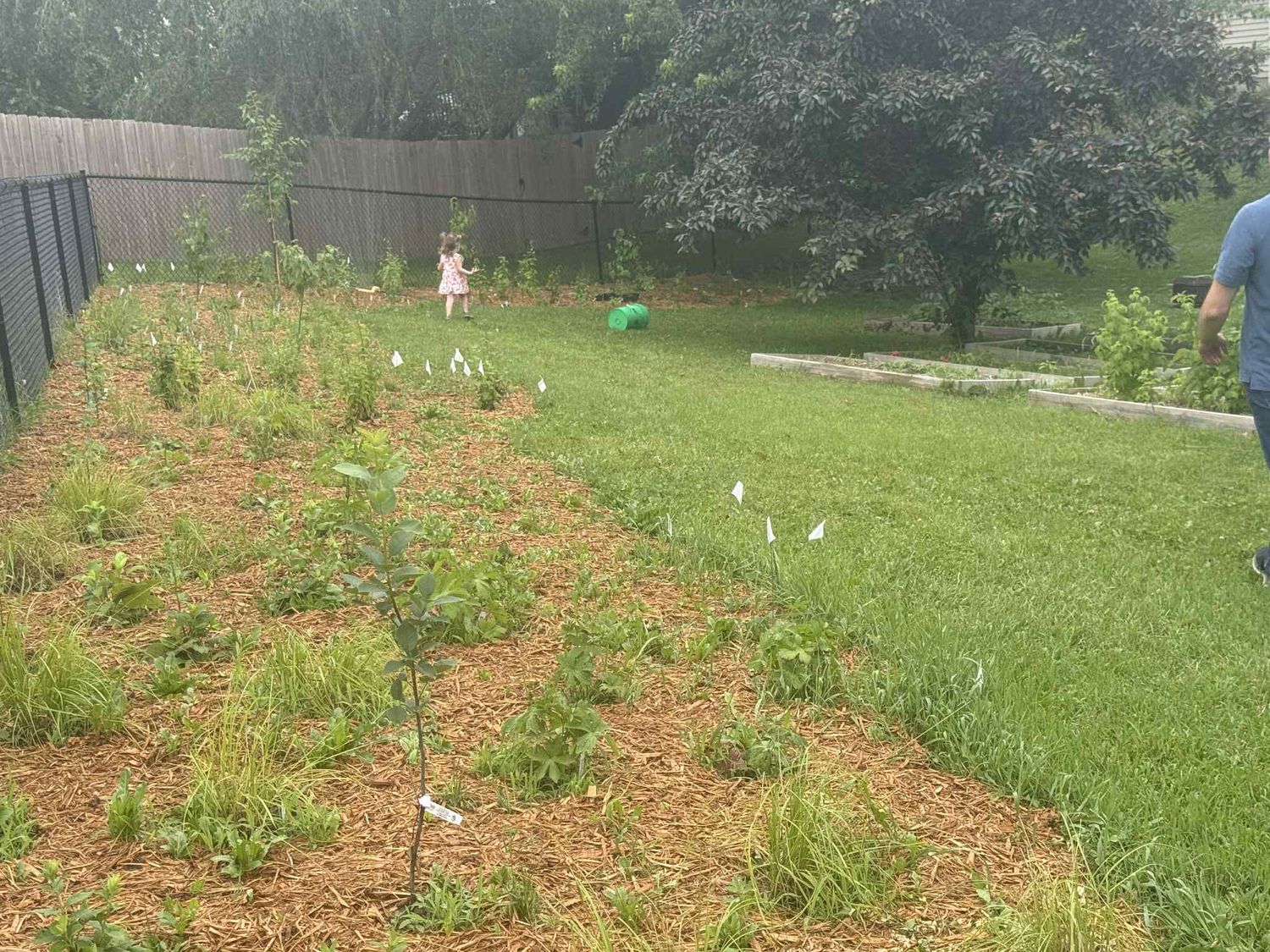
Our layered habitat installed spring 2025
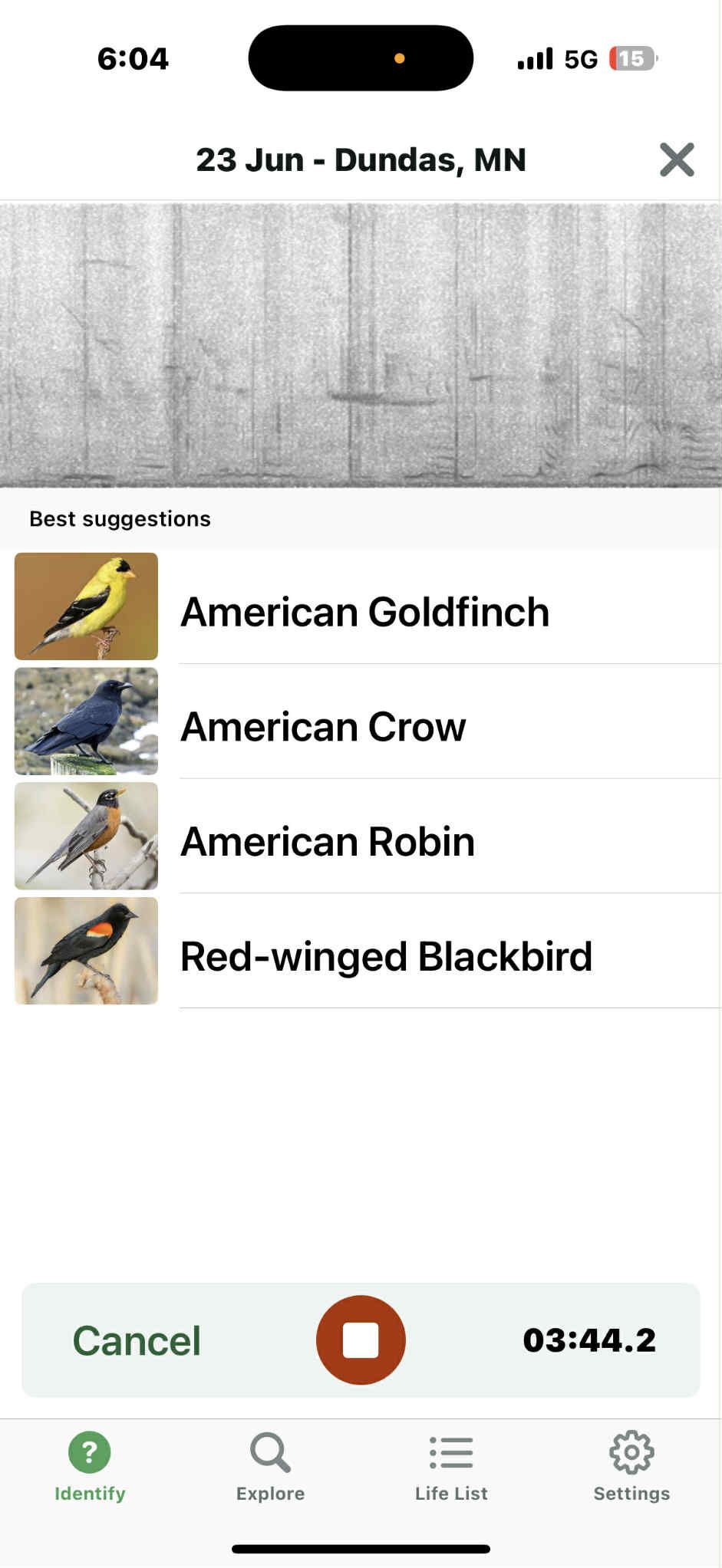
Merlin app identifying bird calls
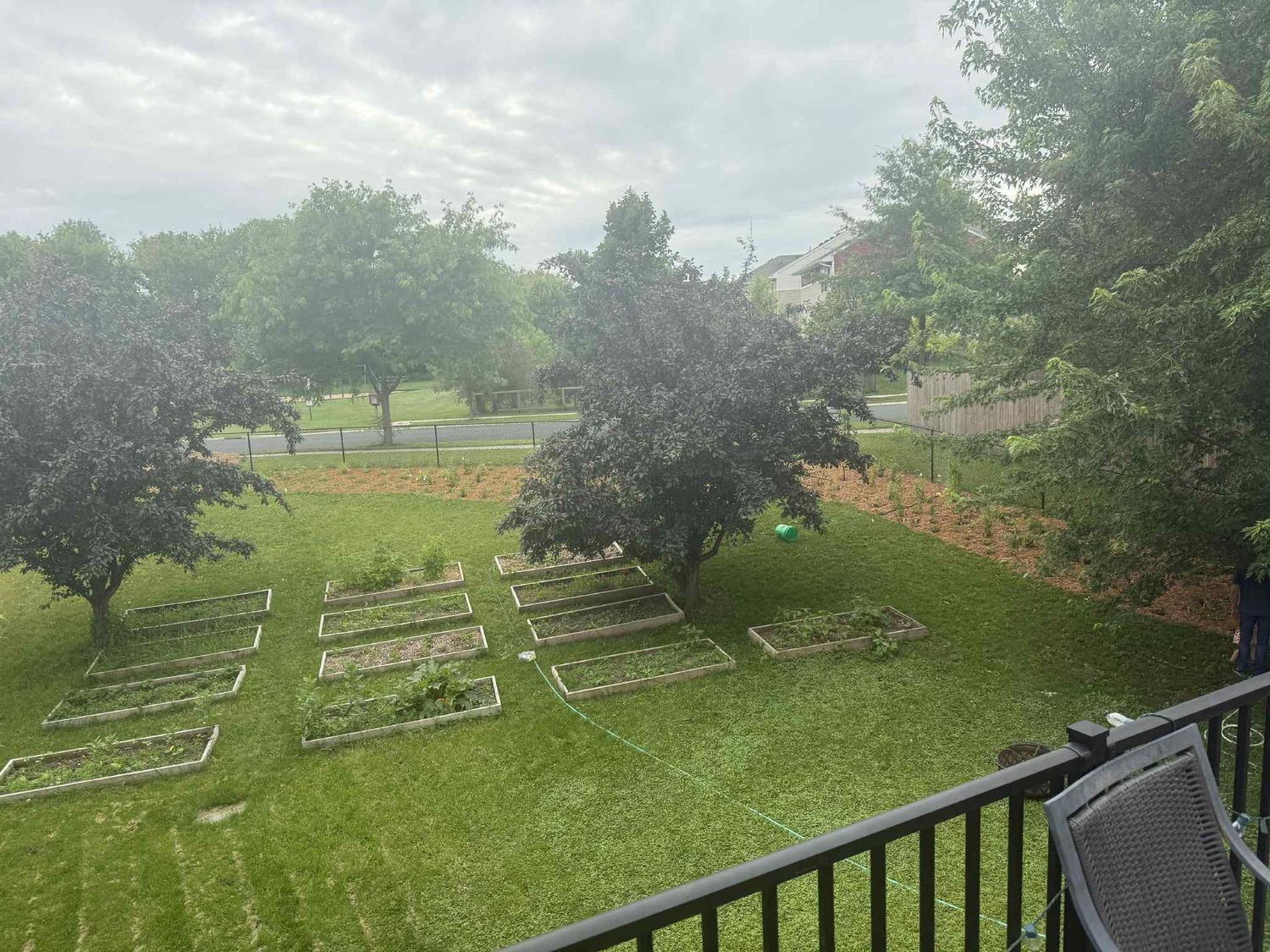
Our food gardens, crab apples, and layered habitat
Every walk, every backyard moment offers a new discovery. Tonight, we took a stroll around the pond near our home. The kids noticed unfamiliar wildflowers and snapped photos to identify later. We watched damselflies hover over the water and used the Merlin Bird ID app to name the calls we heard—red-winged blackbirds, robins, crows, and goldfinches. A mysterious reddish-orange growth on an oak tree sparked another research opportunity for after dinner.
For young children, building observation skills is a foundation for scientific thinking—and it starts with simply paying attention.
Learning Through Doing: Math, Science, and Life Skills
Creating our layered habitat involved more than planting. It gave us hands-on opportunities for:
Math: Measuring plant spacing, counting and sorting species, and using a rain gauge to track and chart rainfall
Science: Learning what living things need to survive—sunlight, water, space, food, and shelter. We talk often about how planting host plants, nectar sources, and creating habitat meets those needs for the insects and animals who share our space
Geography and Climate: Discussing why some foods (bananas, kiwis, citrus) don’t grow here—and what thrives in our Minnesota climate
Sustainability: Understanding why we’re replacing turf with native species to better support wildlife and reduce our carbon footprint
In our food garden, we’ve explored the life cycles of strawberries, raspberries, garlic, and pumpkins. Our garlic tradition—planting just before or after Halloween and harvesting after the 4th of July—is one of our favorite seasonal rhythms. And if you haven’t read Pumpkin Jack, it’s a wonderful story that inspired us to observe decomposition and regrowth firsthand through both indoor and outdoor composting experiments.
Spoiler: Families enrolled in our Fall 2025 science group will get to experience the magic of Pumpkin Jack firsthand!
This year, we added apple trees to our landscape, and we’re learning what it means to steward a small orchard as well. We’ve also explored companion planting—how certain plants can improve soil, deter pests, and attract pollinators naturally.
We’ve also had important conversations about where we source our plants. While my son occasionally asks to bring home bright flowers from big box stores, we talk about why we prioritize pure native plants over cultivars, nativars, or exotics, and why we buy from growers like Out Back Nursery, Northern Holler, and MNL who don’t use harmful pesticides like neonicotinoids. It’s hard to say no sometimes, but we frame it around providing real food and safe habitat for the wildlife we love. It’s not just about beauty—it’s about care.
No Lesson Plan Needed
One of the most beautiful parts of this journey is that it hasn’t required a rigid curriculum or formal lessons. We simply live with intention—inviting our children into the rhythms of the season, offering space for curiosity, and modeling wonder and care for the natural world. The learning happens not because it’s planned, but because it’s lived.
Support and Resources
Some of our transformation was made possible through the Lawns to Legumes grant program, which helps Minnesota residents convert traditional turf into pollinator-friendly habitat. We’ve also leaned on the educational resources from Blue Thumb and used a planting template from Wild Ones, whose designs make it approachable for families to get started—even if you’re new to native gardening.
These programs offer more than funding—they provide community, mentorship, and a vision for what’s possible when families come together to restore and reimagine their landscapes.
(The blue text is hyperlinked to the resources - I'm not affiliated nor do I receive compensations for clicking)
Growing Together
What began as one of my personal passions has become a springboard for family bonding, curiosity-driven learning, and tangible environmental impact. Our habitat is more than a garden—it’s an invitation to notice, to care, and to grow.
Whether it’s discovering eggs on milkweed or watching finches feed their chicks, we’re reminded daily that our yard is alive—and that we’re part of something bigger.