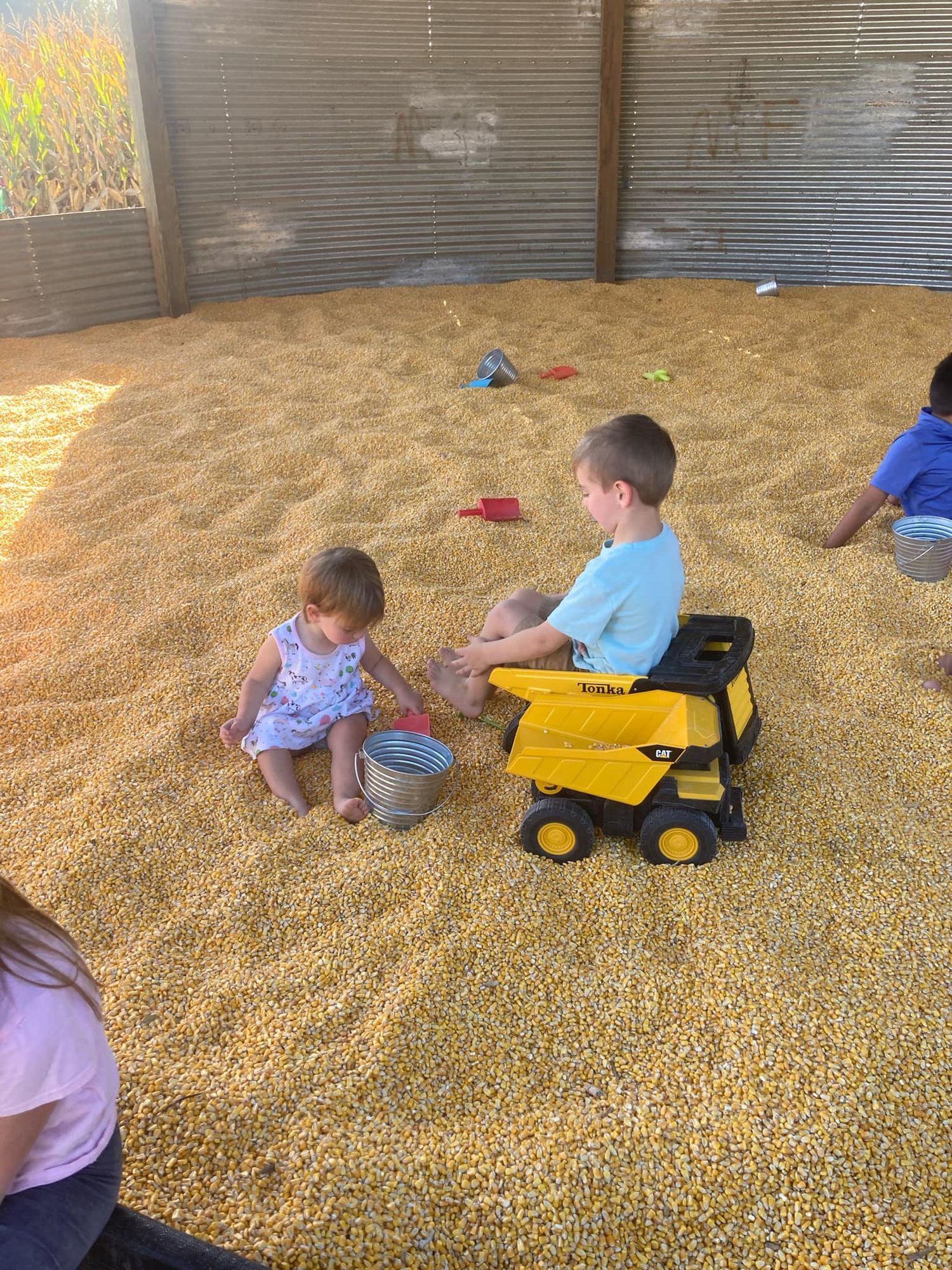
If you step into almost any modern early childhood classroom, you will likely hear the phrase "play-based learning." It has become the standard benchmark for child-centered education. Yet, if we measure many of these environments against the strict developmental, psychological, and neurological definitions of true play, a fascinating contradiction emerges.
Much of what is marketed today as "play-based" is actually adult-directed instruction disguised as choice—learning centers where play is limited to a desired outcome determined by an adult. When we set up a sensory bin specifically designed to teach letter recognition, or create a themed station aimed at achieving a predetermined skill benchmark, we introduce an external agenda. The moment an activity requires a specific result expected by an adult, it ceases to be true play in the eyes of the child.
Understanding what genuine play is—and why it serves as the ultimate engine for human development—requires stepping back from educational jargon and examining the foundational research behind how children actually learn.
The Engine of Discovery: Defining the Playful Mind
To understand the transformative power of play, we must first look at what happens inside the mind of the player. Dr. Stuart Brown, founder of the National Institute for Play, defines play as an absorbing, apparently purposeless activity that provides enjoyment, a suspension of self-consciousness, and an altered sense of time. It carries a compelling inherent attraction that makes the participant want to do it again.
When we look closely at Dr. Brown’s work alongside the research of developmental psychologist Dr. Peter Gray, we see that true play is less about the activity itself and more about a specific state of mind. For genuine play to occur, the activity must be entirely voluntary and self-chosen. The moment participation becomes compulsory, the psychological state shifts.
In this playful state, the means are always far more valued than the ends. Children become deeply engaged in the process—the improvisational potential of building, imagining, or moving—without worrying about an external outcome, a final product, or adult judgment. Though play can feel wonderfully free, Dr. Gray points out that it is rarely chaotic; it operates according to internal rules, concepts, or imaginative boundaries held within the players' minds.
This internal drive manifests differently in every individual. Dr. Brown identifies eight distinct "play personalities" that reflect how we naturally prefer to engage with the world. Some children are Kinesthetes, who think entirely through body movement, or Explorers, who crave the discovery of new physical spaces or ideas. Others operate as Collectors, gathering and curating objects; Creators, who find joy in making things work; or Storytellers, who process reality through narrative and theater. From the silly, improv-loving Joker to the goal-oriented Competitor and the event-organizing Director, these intrinsic inclinations reveal how varied—and deeply personal—the urge to play really is.

How Children Build the World: Schemas, Stages, and Social Growth
Far from being random filler time, play is the precise cognitive mechanism through which children construct an understanding of their physical and social surroundings. Swiss psychologist Jean Piaget demonstrated that intellectual growth unfolds in distinct stages, with play serving as the primary laboratory for testing hypotheses.
In the early sensorimotor stage (birth to age two), infants and toddlers learn entirely through physical sensations, motor actions, and direct manipulation of objects. As they transition into the preoperational stage (ages two to seven), symbolic thinking and language bloom, transforming play into a rich landscape of imagination, fantasy, and self-referential exploration. By the time children enter the concrete operational stage (ages seven to eleven) and eventually the formal operational stage (ages twelve and up), their play naturally matures from symbolic pretend-play into logical, rule-based games, strategic problem-solving, and complex cooperative endeavors.
Throughout these cognitive stages, children process the physical laws of the universe through what Piaget and early childhood educator Chris Athey termed play schemas. When a toddler repeatedly drops food from a high chair, they are exploring the trajectory schema—testing force, velocity, and gravity. When they fill a cart with rocks to push across the yard, they are working through a transporting schema.
From spinning wheels (rotation) and wrapping dolls in blankets (enveloping) to building block walls (enclosing), taping cardboard boxes together (connecting), mixing mud and water (transforming), lining up cars (positioning), or hanging upside down from a couch (orientation), these repeated physical patterns are not misbehavior. They are self-directed, fundamental experiments in geometry, physics, and spatial relationships.
As children master these physical concepts, their social play undergoes an equally profound maturation. Sociologist Mildred Parten identified six predictable stages of social interaction. Infants begin in unoccupied and solitary play, exploring their own bodies and immediate toys in isolation. Around age two, toddlers enter onlooker play, watching peers with keen interest but keeping their distance, before moving into parallel play, where they sit side-by-side using similar materials without direct interaction.
By preschool, children step into associative play, sharing tools and chatting amiably without a unified goal, until around age four and a half, when true cooperative play emerges. Here, children form teams, assign dramatic roles, negotiate rules, and work toward a shared, creative outcome.

From Consumers to Creators: Emergent Dramatics & Child-Designed Environments
To bridge the gap between adult structure and true child agency, adults can invite children to design, construct, and manage their own play environments from scratch. Rather than walking into a fully pre-assembled, adult-curated dramatic play center, children experience exponentially deeper learning when they process real-world experiences by building the world themselves.
Consider what happens when children visit an apple orchard and are given the open-ended space, loose parts, and freedom to recreate that experience at home or in the classroom. They do not merely "play orchard"—they become architects, artists, economists, and engineers. They paint cardboard trees, repurpose red, yellow, and green ball-pit balls to serve as apples, build hay bales and tractors, construct a pumpkin patch, and establish an apple shop with hand-crafted price tags.
Because the children are the sole creators, the environment carries zero adult-imposed expectations or forced skill drills. Yet, within this self-directed framework, academic and developmental domains integrate seamlessly:
- Mathematical & Logical Reasoning: Children spontaneously sort objects by color and size, assign pricing, handle pretend transactions, and measure physical spaces.
- Complex Schema Work: Building cardboard structures tests connecting and enclosing schemas, while hauling "apples" or moving materials activates transporting schemas.
- Social-Emotional Evolution: Moving from individual crafting to shared shopkeeping allows children to fluidly transition from associative play into sophisticated cooperative play—negotiating roles, sharing tools, and setting collaborative rules.
This self-authored approach can expand to encompass every facet of a child’s expanding world. Inspired by shared books, community visits, and family outings, children naturally extend this design process to construct libraries, post offices, campsites, bakeries, jewelry shops, fire stations, veterinary clinics, space shuttles, gardens, and home settings. When children build the world themselves, they move from being passive consumers of adult-designed spaces to active, empowered creators of their own learning.

Historical Frameworks: Honoring the Child’s Agency
Ever since Friedrich Froebel founded the world's first kindergarten in 1837—educational pioneers have sought to balance adult structure with child agency, each interpreting the purpose of childhood activity in fundamentally distinct ways.
Friedrich Froebel designed the original kindergarten around a deeply spiritual and symbolic vision. He created "Gifts" (geometric objects like spheres, cubes, and cylinders) and "Occupations" (hands-on tasks like weaving and paper folding) to help children understand the divine, mathematical laws of the universe. While these activities look like open play to a modern observer, Froebel's original model intended for teachers to guide children through highly structured, symbolic progressions to reveal deeper spiritual truths.
Maria Montessori took a distinctly different path: Montessori does not prioritize "play." She explicitly favored "purposeful work" over open-ended play or fantasy. In a Montessori classroom, children use highly prescriptive, self-correcting materials—such as the pink tower blocks or golden math beads—with a precise, orderly method. The adult structure is rigid in the environment's design, but the child retains complete agency to choose which work to undertake and for how long.
By contrast, Reggio Emilia rejects preset structures altogether. Unlike Montessori, Reggio Emilia has no set curriculum, standardized materials, or prescribed teacher training tracks. Instead, it relies on the "hundred languages of children"—art, movement, building, drama—to co-construct knowledge through long-term, organic projects. Treating the environment as a "third teacher," the adult acts as a co-learner and researcher rather than a director, meaning structure remains fluid and emerges directly from the children's immediate interests.

Creative Freedom and Strategic Play: From Choice-Based Art to Gameschooling
This distinction between adult control and child agency is particularly striking in the creative arts. In many classrooms, art is reduced to product-oriented crafts, where every child follows step-by-step instructions to produce near-identical paper plate ladybugs or holiday cards. The adult holds the vision, controls the outcome, and evaluates the result.
True creative play, by contrast, relies on process art—where the focus rests entirely on sensation, technique, material properties, and cause-and-effect, with no predetermined outcome or "right" way to finish.
This philosophy finds its fullest expression in TAB (Teaching for Artistic Behavior), a choice-based pedagogy that treats the child as an authentic, autonomous artist. In a TAB classroom, the space is organized into open studios (such as drawing, painting, 3D modeling, or clay). The student decides what to make, how to make it, and why, while the teacher maintains the environment and offers technical guidance only when sought. Much like process art, TAB preserves intrinsic motivation by removing external evaluation and keeping the child in full creative control.
As children grow beyond early childhood into cooperative play, their drive for discovery naturally expands to include systems, shared rules, and structured challenge. This is where Gameschooling—the intentional use of tabletop, board, and card games as an educational framework—bridges the gap between unstructured play and academic mastery.
While a board game has defined rules, it remains true play because participation is voluntary and the rules are freely accepted by the players. Through tabletop play, abstract skills like math fluency, reading comprehension, spatial reasoning, and probability happen organically as a natural byproduct of gameplay. More importantly, games provide a safe container for executive function and emotional growth: children practice planning ahead, managing risk, adapting to unexpected setbacks, and experiencing victory or defeat in a low-stakes setting where "failing" simply means setting up the board to try again.
Risk, Impact, and Long-Term Research: The High Stakes of Pre-K Design
When adults attempt to make play completely safe and orderly, they often banish the very experiences children need most: risky play, rough-and-tumble play, and aggressive or fantasy play.
Dr. Stuart Brown’s landmark research—which included studying clinical populations and incarcerated individuals—revealed a startling common denominator: severe childhood play deprivation. Dr. Brown discovered that a lack of early play, particularly physical, risky, and boundary-testing play, correlates strongly with deficits in emotional regulation, empathy, and impulse control later in life.
Play that involves physical impact, wrestling, play-fighting, or calculated physical risk serves essential neurological functions. It teaches children how to manage adrenaline, switch off the fight-or-flight response, and read subtle non-verbal cues from peers to ensure the game remains fun for everyone. Similarly, superhero or "bad guy" play is rarely an indicator of real-world aggression; it is a healthy cognitive tool for processing concepts of power, protection, boundaries, and control.

HighScope vs. The "Academic Push-Down": Why Classroom Structure Matters
The necessity of protecting authentic, child-led play is backed by decades of longitudinal research—though comparing these studies reveals a crucial distinction between child-agency models and high-compliance public schooling.
The landmark HighScope Preschool Curriculum Study tracked children into adulthood (ages 15, 23, and beyond) across three models: direct academic instruction, HighScope (a child-agency "Plan-Do-Review" model), and traditional play-based preschool. While direct instruction yielded minor initial skill leads at age five, those advantages vanished rapidly. By adulthood, those from direct-instruction environments experienced significantly higher rates of emotional disturbance, social friction, and behavioral difficulties compared to peers allowed to learn through self-directed play.
This phenomenon is further explained by the well-documented "Fade-Out Effect" in national Head Start evaluations. While structured early pre-K provides immediate early gains in literacy and math, those advantages regularly converge and disappear by 3rd grade as non-pre-K peers catch up in elementary school.
Even more striking are the results of the Vanderbilt University Tennessee Voluntary Pre-K Study, which followed nearly 3,000 children through 6th grade in state-funded pre-K programs. Rather than simple fade-out, researchers discovered an academic and behavioral reversal:
- Academic Deficits: By 3rd grade, children in the state pre-K program scored lower on reading and math tests than waitlisted peers who stayed home—a gap that widened further by 6th grade.
- Behavioral Disruption: By 6th grade, children from the state pre-K program had significantly higher rates of disciplinary infractions, suspensions, special education placements, and difficulty following school rules.
Why did public pre-K backfire while HighScope succeeded? Observational data from the Vanderbilt study pointed directly to classroom environment. Modern public pre-Ks are frequently scaled up as high-compliance, adult-directed institutions. Four-year-olds were subjected to whole-group lectures, desk work, rigid transitions, and forced compliance.
Pushing formal academics before a child's brain is developmentally ready creates "shallow learning"—rote mechanics that pass a short-term test but fail when middle-school academics require deep conceptual reasoning and self-motivation. Furthermore, depriving young children of self-directed peer negotiation and physical risk undermines internal executive function, producing early school fatigue and emotional burnout that manifests as disciplinary trouble later in childhood.
Forcing formal, adult-directed instruction before a child is neurologically ready offers fleeting short-term metrics at the direct expense of long-term self-regulation, curiosity, and emotional resilience.
Practical Takeaways: Protecting Authentic Play
Restoring authentic play in our homes, classrooms, and learning spaces does not require expensive materials—it requires a shift in adult perspective.
- Audit the "Play": Look closely at your daily setup and ask: Who holds the goal? If the adult dictates the steps or expects a specific output, acknowledge it as direct instruction and protect separate, unscripted time for goal-free, child-led discovery.
- Shift from Curators to Collaborators: Invite children to design their own dramatic play centers using loose parts, cardboard, and household/classroom materials based on recent field trips, books, or community observations.
- Embrace Process Over Product: Supply open-ended tools—paints, clay, cardboard, loose parts—without providing a finished sample or step-by-step instructions. Let the value remain entirely in the creation rather than the finished piece.
- Decode Behavioral Schemas: When a child throws, dumps, spins, or hides objects, look for the underlying schema. Redirect the physical urge to a safe outlet rather than shutting down the natural physics experiment.
- Step Back During Risk and Roughhouse: Allow children space to test their physical limits and negotiate peer boundaries. Observe closely for smiles, relaxed body posture, and mutual consent, stepping in only when safety genuinely requires it.
- Leverage Tabletop Games for Academic Fluency: Bring gameschooling into your routine by selecting tabletop games with mechanics that naturally reinforce math, spatial reasoning, or language skills, keeping the focus entirely on shared enjoyment.
- Slow Down and Follow Their Lead: Shift from rigid, pre-packaged lesson plans to an emergent mindset. Observe what captures a child's spontaneous curiosity during free play, then introduce subtle provocations that allow them to explore those concepts on their own terms.
Returning to Authentic Play
If we want to honor how children actually develop, we must be willing to step back. True play-based learning is not about manufacturing clever activities that trick children into completing academic tasks. It requires slowing down, observing closely, and trusting children to lead their own discovery of the world.
When we provide rich environments, open-ended tools, access to nature, and the freedom to take calculated risks, children do not just play—they build the cognitive, social, and emotional foundations that serve them for the rest of their lives.
References and Further Reading
Athey, C. (2007). Extending Thought in Young Children: A Parent-Teacher Partnership. SAGE Publications. (Foundational work on play schemas).
Brown, S., & Vaughan, C. (2009). Play: How It Shapes the Brain, Opens the Imagination, and Invigorates the Soul. Avery / Penguin Random House. (Core research on play personalities, play deprivation, and neurological impact).
Durkin, K., Lipsey, M. W., Farran, D. C., & Rooks-Ellis, S. E. (2022). Effects of a state-supported Pre-K program on children’s school trajectory through 6th grade. Developmental Psychology, 58(8), 1419–1431. (The Vanderbilt Tennessee Voluntary Pre-K Study findings on long-term academic and behavioral reversal).
Froebel, F. (1887). The Education of Man (W. N. Hailmann, Trans.). D. Appleton & Company. (Original framework on Kindergarten Gifts, Occupations, and symbolic play).
Gray, P. (2013). Free to Learn: Why Unleashing the Instinct to Play Will Make Our Children Happier, More Self-Reliant, and Better Students for Life. Basic Books. (Definitions of self-directed play, intrinsic motivation, and age-mixed play).
Malaguzzi, L. (1998). No way. The hundred is there. In C. Edwards, L. Gandini, & G. Forman (Eds.), The Hundred Languages of Children: The Reggio Emilia Approach—Advanced Reflections (pp. 2–3). Ablex Publishing. (Foundational framework of Reggio Emilia).
Montessori, M. (1964). The Montessori Method. Schocken Books. (Distinction between purposeful work, self-correcting materials, and open play).
Parten, M. B. (1932). Social participation among pre-school children. The Journal of Abnormal and Social Psychology, 27(3), 243–269. (Classification of the six social stages of play).
Piaget, J. (1962). Play, Dreams and Imitation in Childhood. W. W. Norton & Company. (Cognitive stages of development and symbolic play).
Pelo, A. (2007). The Language of Art: Inquiry-Based Studio Practices in Early Childhood Settings. Redleaf Press. (Process art, open studio environments, and Teaching for Artistic Behavior principles).
Schweinhart, L. J., Montie, J., Xiang, Z., Barnett, W. S., Belfield, C. R., & Nores, M. (2005). Lifetime Effects: The HighScope Perry Preschool Study Through Age 40. HighScope Press. (Longitudinal study comparing direct instruction, HighScope, and traditional play models).
U.S. Department of Health and Human Services, Administration for Children and Families (2010). Head Start Impact Study: Final Report. Washington, DC. (National evaluation documenting the 3rd-grade academic convergence/fade-out effect).